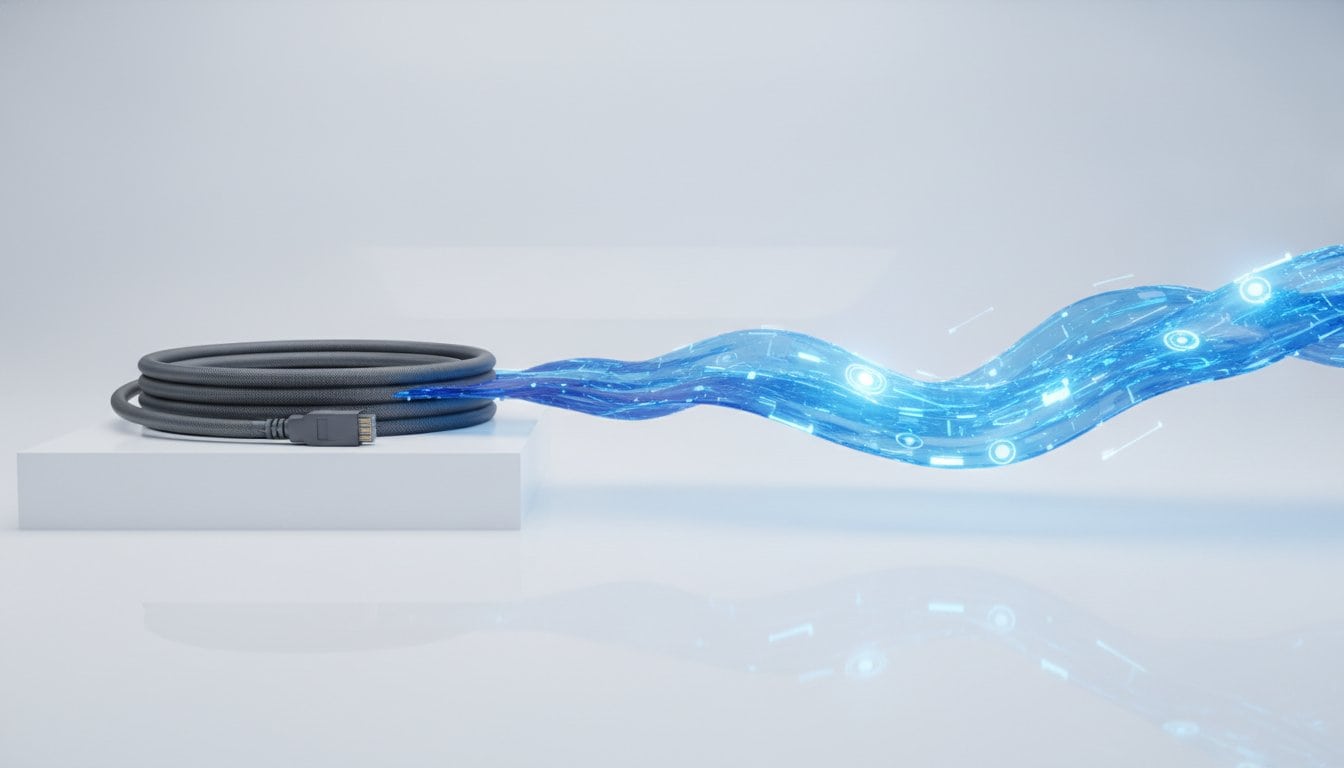
By the close of 2026, conversational AI will have stripped 80 billion dollars in labor costs from global contact centers, yet many firms remain anchored by physical T1 lines that cannot support a modern AI dialer. You likely recognize the mounting frustration of paying premium rates for rigid PRI circuits that fail to scale during your most critical sales pushes. Choosing between SIP trunking vs PRI isn’t just a technical preference; it’s a strategic decision that determines whether your communication stack acts as a growth engine or a legacy bottleneck.
We understand that reliability is your primary concern when managing high-volume outreach. This article provides a definitive ROI comparison to help you future-proof your infrastructure and unlock the fluidity of cloud-based scaling. You’ll discover how SIP trunking serves as the essential foundation for AI lead generation and seamless CRM integration. We’ll also preview the latest 2026 FCC compliance standards, including the mandatory KYC requirements and 603 plus response codes. This ensures your transition to a more organic, automated user journey is both secure and highly profitable for your national operations.
As we move through 2026, the technical landscape has reached a definitive crossroads. The traditional reliance on physical copper is dissolving in favor of cloud-native logic. When evaluating SIP trunking vs PRI, you’re choosing between the static constraints of the 20th century and the fluid, AI-ready architecture of the future. This year marks a tipping point where maintaining legacy hardware often costs more than a full digital overhaul. The shift from hardware-centric to software-defined communication is no longer optional for firms seeking market dominance.
PRI is a telecommunications standard based on the physical T1 line, a dedicated circuit that carries voice and data over copper wires. This infrastructure is inherently rigid. A single PRI circuit provides exactly 23 channels for concurrent calls. If your business grows and requires a 24th line, you’re forced to purchase an entirely new T1 block, paying for capacity you don’t yet need. This “bundle” model creates a resource-heavy environment that resists rapid scaling.
While PRI was once praised for its security through physical isolation, that isolation is now a cage. It prevents your communication stack from interacting with modern data tools and AI-driven analytics. The hardware dependencies of PRI require on-site maintenance and specialized technicians, creating a physical anchor that slows down organizational momentum and increases overhead. It’s a legacy advantage that has become a modern liability.
SIP trunking utilizes the Session Initiation Protocol to deliver voice and multimedia services over an IP network. By leveraging SIP trunking technology, businesses can bypass the physical limitations of copper altogether. Data is sent via packet-switching, allowing for a more efficient use of bandwidth compared to the circuit-switched model of the past. It transforms your voice communication into a data stream that flows as easily as your web traffic.
SIP trunking is the virtual bridge between your PBX and the PSTN.
The advantages of this software-defined approach are absolute:
The fundamental shift from hardware-centric to software-defined communication is driven by the need for efficiency. In 2026, your communication backbone must be as agile as the AI tools it supports. SIP provides that agility by transforming telephony into a scalable digital service that is ready for immediate action.
The operational divide between SIP trunking vs PRI centers on how your business handles resource allocation. PRI is a legacy model built on rigid hardware investments. SIP is a modern, software-defined solution designed for fluidity. When you choose SIP, you replace expensive capital expenditure with a predictable monthly recurring charge. This shift isn’t just about saving money; it’s about reclaiming the opportunity cost lost to idle infrastructure.
PRI infrastructure operates on a fixed 23-channel block system. This creates a significant efficiency gap. If your sales team grows and requires a 24th concurrent call path, you’re forced to purchase an entirely new T1 circuit. You’ll pay for 46 channels while only utilizing 24 of them. This “23-channel ceiling” drains your budget and prevents agile responses to market demand. It’s an inefficient use of capital that slows your momentum.
SIP trunking eliminates this bottleneck. It offers a pay-as-you-grow model that allows for instant virtual provisioning. During peak seasons or high-volume outbound campaigns, you can scale your capacity upward in minutes. Once the surge ends, you simply scale back down. This elasticity ensures that your communication costs always align with your actual usage, providing the resource plenty needed for aggressive market dominance.
A common misconception is that physical circuits offer superior reliability. In 2026, the opposite is often true. A physical PRI line represents a single point of failure. If a local construction crew accidentally cuts a copper wire, your entire office goes dark. SIP trunking leverages redundant IP networks and SD-WAN technology to ensure near-perfect uptime. If your primary internet connection fails, SIP automatically reroutes traffic to a secondary link or a mobile backup without dropping your active sessions.
This geographic independence also allows you to project a local presence anywhere in the country. You can utilize local caller ID numbers (DIDs) without maintaining a physical office in every region. This strategy increases answer rates and builds trust with your leads. For leaders looking to optimize their outreach, a scalable communication setup is the first step toward transforming your call center into a high-performance instrument. The combination of cost efficiency and technical resilience makes the transition to SIP an absolute requirement for modern growth.
In the 2026 sales environment, the debate of SIP trunking vs PRI moves beyond simple connectivity into the territory of data intelligence. While PRI provides a stable voice path, it lacks the signaling depth required by modern computational logic. AI dialers don’t just place calls; they analyze, adapt, and execute complex logic in real time. This requires a communication backbone that carries rich metadata alongside the audio stream, a task that legacy copper circuits aren’t designed to handle.
Modern predictive and power dialers rely on the low-latency environment of a SIP-based network to function at peak efficiency. Because SIP is packet-switched and software-defined, it allows for near-instant answering machine detection and local ID injection at a massive scale. These features are critical for maintaining high answer rates and ensuring your agents spend their time only on verified opportunities. Without the fluidity of SIP, your AI tools are essentially throttled by the hardware limits of your physical phone lines.
Low latency is also the secret behind achieving real, human-like AI conversations. When an automated system interacts with a lead, every millisecond of delay risks breaking the organic flow of the interaction. SIP ensures that audio packet delivery is consistent and fast, which is a prerequisite for accurate sentiment analysis. It also facilitates highly efficient preattended lead transfers, allowing a qualified prospect to move from an automated interaction to a live closer without a jarring pause or technical hiccup.
The true power of a modern communication stack lies in its ability to break down data silos. By utilizing CRM Integration, every call record, transcription, and sentiment score is synced directly to your lead’s profile in real time. This technical cohesion transforms your outreach from a series of disconnected phone calls into a strategic instrument for market dominance. SIP also supports omnichannel capabilities, allowing your team to pivot between voice and SMS within the same thread to keep the customer journey moving forward.
SIP acts as the digital connective tissue that binds real-time voice data with your CRM and AI tools to create a single, high-output sales engine.
Transitioning from legacy circuits to a modern IP-based system is a strategic maneuver that requires precision. When comparing SIP trunking vs PRI, the migration phase is where many businesses hesitate due to fears of downtime. This blueprint ensures your organization moves toward technical cohesion without sacrificing current operational continuity. The shift is less about replacing wires and more about upgrading your communication logic to a software-defined environment.
Start with a comprehensive audit of your existing PBX hardware. If your system was manufactured in the last decade, it likely supports SIP natively. For older, hardware-centric setups, a SIP gateway acts as a bridge. This gateway converts IP packets into the PRI-style signaling your legacy hardware expects, allowing you to enjoy the cost benefits of SIP while sweating your existing assets. This hybrid approach provides a low-risk entry point into modern telecommunications.
Your bandwidth assessment is the next critical pillar. High-volume AI dialing puts unique pressure on your network. You must ensure your internet connection can handle the increased concurrent VoIP traffic without sacrificing audio quality. Implementing SD-WAN or prioritizing voice traffic via Quality of Service (QoS) settings prevents jitter and ensures every interaction remains organic and fluid.
Success begins with selecting a provider capable of handling the heavy data requirements of AI-driven outreach. Once you select a partner, perform rigorous QoS testing to verify that your latency remains below 150ms. This threshold is mandatory for maintaining the real human-like conversations your AI tools facilitate. Finally, transition your team onto modern Cloud PBX interfaces. Training ensures your staff can leverage new analytics and routing features from day one.
Number porting is the most common point of friction during a transition. Avoid delays by verifying that your current Customer Service Record (CSR) matches your new provider’s submission exactly. Maintain your PRI lines as a failover route during the initial cutover to guarantee zero downtime. This redundancy acts as a safety net while you verify the stability of your new virtual trunks.
Virtual environments also require updated E911 configurations. Since SIP trunks aren’t tied to a physical copper wire, you must manually associate your business address with your virtual numbers. This ensures emergency services arrive at the correct location. If you’re ready to modernize your stack and eliminate legacy bottlenecks, book a technical consultation to see how we streamline the transition to an AI-ready backbone.
The strategic choice between SIP trunking vs PRI often concludes at the technical layer, yet for high-growth firms, the true competitive advantage lies in the intelligence flowing through that connection. Nexdial transforms your communication backbone from a simple utility into a primary strategic asset. By integrating our proprietary SIP infrastructure directly with our AI-powered dialer software, we eliminate the friction typically found when bridging disparate vendors. This technical cohesion ensures that your outreach remains fluid, scalable, and focused on one primary goal: market dominance.
Our unified platform houses your dialer, Cloud PBX, and SIP trunks in a single ecosystem. This architecture allows for the high-volume delivery of verified opportunities without the latency issues that plague generic providers. We empower your team to scale their national presence instantly. By utilizing local caller ID and integrated SMS marketing, your agents achieve higher answer rates and build immediate trust with prospects, regardless of their physical location.
Nexdial leverages advanced computational logic to conduct naturalistic conversations with leads at a scale that was previously impossible. Our AI dialer software doesn’t just place calls; it qualifies prospects through organic interaction. Once a lead is prequalified, the system executes an automated transfer to your top closers. This ensures your human talent spends every minute engaging with high-intent opportunities rather than navigating gatekeepers or answering machines.
Real-time reporting and analytics provide the visibility needed for rapid adjustments. You gain immediate insights into sentiment scores, call duration, and conversion trends across your entire national operation. This level of data reporting transforms your call center into a precision instrument, allowing you to allocate resources based on absolute facts rather than intuition.
Nexdial’s infrastructure is purpose-built for the high-volume, low-latency requirements of 2026. We understand that in a software-defined world, every millisecond counts. Our redundant IP network ensures that your communication remains uninterrupted, providing the professional reassurance you need to scale aggressively. We act as a strategic ally, providing the implementation support and technical expertise required to future-proof your business communication.
The transition from legacy hardware to a cloud-native environment is a journey toward resource plenty. We provide the tools and the expert partnership to make that journey a success. Scale your sales with Nexdial’s AI-Powered Cloud Contact Center and discover the difference that intelligent, AI-optimized SIP can make for your bottom line.
The decision between SIP trunking vs PRI is no longer a matter of simple telephony; it’s a choice between maintaining a legacy anchor or igniting a virtual engine for growth. As physical T1 lines reach technical obsolescence in 2026, the shift to software-defined communication becomes the prerequisite for any high-volume sales operation. You’ve seen how SIP provides the metadata and low-latency performance that modern AI tools demand to function at peak efficiency. This transition ensures your infrastructure remains a strategic instrument rather than a costly bottleneck.
Nexdial stands ready as your strategic ally in this digital evolution. Our platform delivers Advanced AI Predictive & Power Dialers and Seamless CRM Integration to transform your outreach into a high-output sales engine. With National US Coverage and local caller ID, your team can project a professional presence anywhere instantly. It’s time to replace rigid hardware with the fluid scalability your business deserves. Transform your outreach with Nexdial’s AI-powered SIP solutions and secure your position at the forefront of your industry. Your journey toward technical cohesion starts today.
The fundamental difference lies in the delivery medium. PRI uses physical copper T1 lines to transmit voice via circuit-switching, while SIP trunking delivers voice as data packets over your existing IP network. This shift from hardware to software allows for greater flexibility. In the debate of SIP trunking vs PRI, the former offers a virtual connection that removes the geographic and physical constraints of traditional telephony.
Yes, you can bridge legacy equipment with modern protocols using a SIP gateway. This device converts the internet-based signals into the PRI-style signaling that your older on-site PBX understands. It allows you to leverage the cost-efficiency of the cloud without a total hardware overhaul. This hybrid approach is an excellent way to sweat your existing assets while preparing for a full cloud contact center migration.
Modern SIP trunking often provides superior security through advanced encryption protocols like TLS and SRTP. While PRI relies on physical isolation for security, SIP uses Session Border Controllers (SBCs) and real-time fraud monitoring to protect your data. These software-defined defenses are more adaptable to the evolving cyber threats of 2026. They ensure your communication remains confidential and resilient against unauthorized access.
SIP trunking offers virtually unlimited concurrent call capacity, whereas a PRI is capped at 23 channels per circuit. With SIP, you can scale your call paths up or down instantly based on your bandwidth. You don’t have to purchase fixed blocks of 23 channels or wait for physical line installations. This elasticity makes it much easier to handle seasonal sales spikes or high-volume outbound calling campaigns.
No, you can keep your existing business phone numbers through a process called number porting. Your new provider works with your current carrier to transfer your DIDs to the IP network. This transition is typically seamless and ensures that your established brand identity remains intact. It’s a standard procedure that allows for a zero-downtime move to a more modern communication backbone.
Businesses moving to SIP trunking often see a reduction in monthly recurring costs of 40% to 70% compared to traditional T1 lines. These savings come from eliminating expensive hardware maintenance, reducing long-distance charges, and ending the practice of paying for idle PRI channels. Because SIP uses your existing internet connection, you remove the need for a separate, dedicated voice circuit, streamlining your total telecommunications budget.
SIP provides the high-speed data signaling and low latency that AI dialer software requires to function effectively. Unlike PRI, SIP carries rich metadata that enables features like intelligent call routing and real-time sentiment analysis. This technical foundation is what allows Nexdial’s platform to facilitate real human-like conversations. It ensures that automated interactions feel organic and that prequalified lead transfers happen without jarring technical delays.
SIP trunking includes built-in disaster recovery features that PRI cannot match. If your primary internet connection fails, the system can automatically reroute calls to a secondary office, a mobile backup, or a voicemail system. You can manage these failover rules through a digital dashboard in real time. This ensures that your business remains reachable even during local network outages, maintaining your professional reliability.
© 2019 - 2026 Nexdial, Inc. | All right reserved