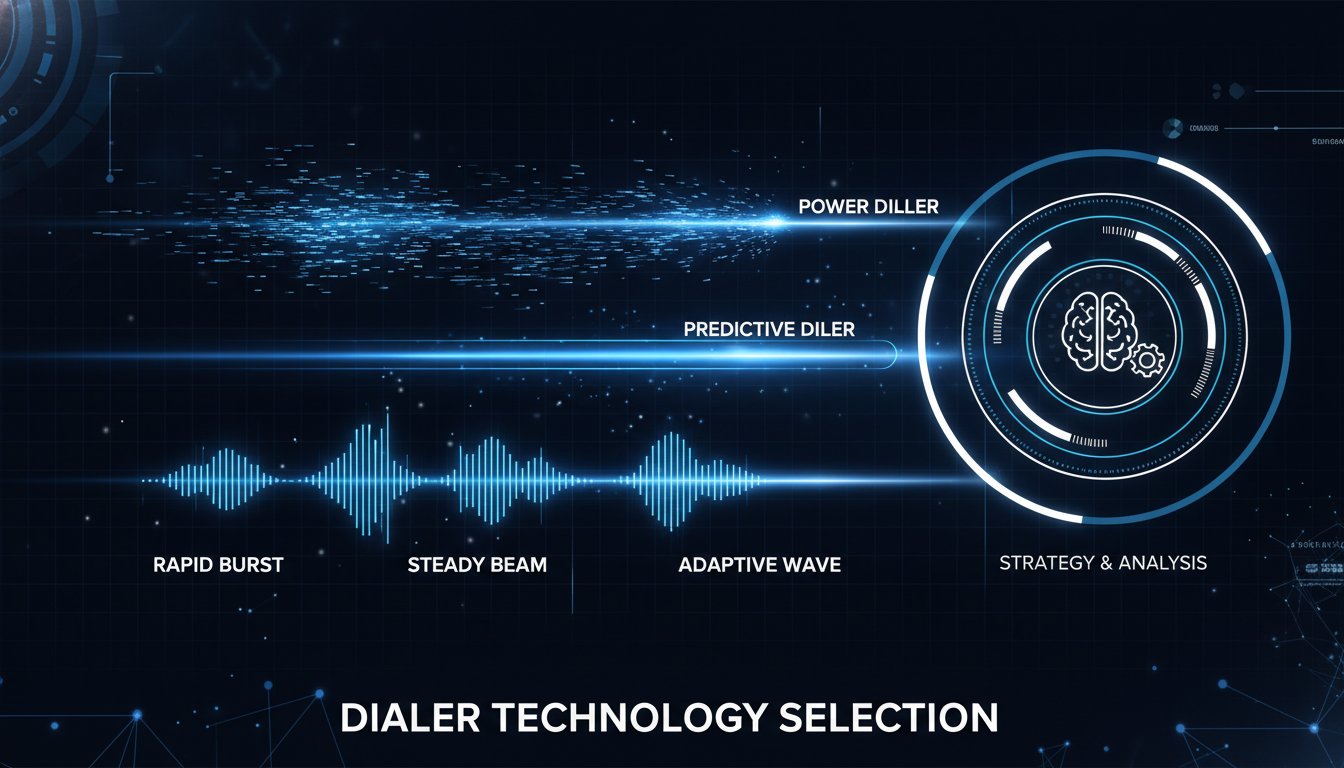
The fastest dialing algorithm in your tech stack might actually be the primary reason your outbound revenue is stalling. In an era where speed is often equated with success, the “fastest” approach often triggers aggressive carrier filters that label 95% of unidentified calls as “Spam Likely.” When evaluating a predictive dialer vs power dialer, the focus must shift from pure volume to the high-volume delivery of verified opportunities. You’ve likely felt the frustration of low agent productivity and the dreaded “telemarketer delay” killing your conversions before they even start.
We understand that keeping your sales development representatives on the phone is the only way to scale, but you shouldn’t have to choose between volume and voice quality. This guide will help you master the strategic differences needed to maximize efficiency while remaining fully compliant with 2026 FCC regulations and the latest consent revocation rules. You’ll learn how to transform your outreach into a strategic instrument for market dominance by aligning dialing logic with lead value. We will break down how to achieve seamless CRM synchronization and utilize intelligent automation to maintain the organic, human-like quality of every interaction.
Manual dialing is a relic of a slower era. It creates a rigid ceiling that prevents even the most talented sales development representatives from reaching their full potential. When analyzing a predictive dialer vs power dialer, the underlying logic dictates more than just the speed of the call; it determines the psychological readiness of your agents to deliver a natural, high-impact pitch. Relying on manual input means your team spends more time staring at a keypad than engaging in the real human-like conversations that drive revenue.
The transition from mechanical autodialer technology to AI-driven conversation intelligence has redefined market dominance. In 2026, the stakes are higher than ever. With the April 11, 2026, universal consent revocation rules now in full effect, your dialing logic must be precise to avoid catastrophic penalties. TCPA violations can cost up to $1,500 per willful call, while DNC registry errors reach a staggering $50,120 per violation. Choosing the right dialer is no longer just a productivity choice; it is a fundamental compliance necessity.
The ‘dead air’ in a manual sales day is a silent profit killer. If an SDR spends just 30 seconds per call on manual entry and waiting for ringtones, they lose nearly an hour of active time for every 100 calls made. This repetitive friction accelerates agent burnout and drives high turnover rates. Manual processes also lead to fragmented data, as exhausted agents often skip the detailed CRM logging required for long-term lead nurturing. Automated systems eliminate these bottlenecks, ensuring that every interaction is captured with absolute accuracy.
Advanced dialers function as the high-performance engine of the AI-powered cloud contact center. This ecosystem relies on SIP trunking to maintain high-fidelity voice connections, ensuring your team sounds professional and local rather than like a distant, filtered robocall. Integration with your existing CRM is a non-negotiable requirement for competitive teams. By synchronizing dialing logic with real-time data, you transform the user journey into a primary strategic asset that delivers verified opportunities at scale.
Understanding the internal logic of your outreach engine is the first step toward market dominance. While manual dialing relies on human effort, automated systems use distinct mathematical models to manage call flow. The primary debate often centers on the predictive dialer vs power dialer, yet each serves a specific strategic purpose based on lead value and agent capacity. These systems don’t just dial numbers; they orchestrate the entire customer journey by managing the frequency and timing of every connection attempt.
Predictive dialers work on probability. They analyze historical call durations and real-time answer rates to launch multiple outbound attempts simultaneously. Predictive dialing is an algorithm-based system that anticipates agent availability to minimize idle time. This is achieved through a dynamic pacing ratio. If your data shows that only 15% of calls are answered, the system might dial six numbers at once for a single agent. This maximizes talk time but requires strict adherence to the Telemarketing Sales Rule, which mandates that the abandoned call rate must stay below 3%.
Answering Machine Detection (AMD) plays a critical role in this velocity. High-performance AMD filters out silent calls and recordings in milliseconds, ensuring agents only engage with live humans. While this speed is impressive, the risk of a “silent gap” or dropped call increases if the pacing ratio is set too aggressively for your current agent headcount.
A power dialer operates with a 1-to-1 connection ratio. Unlike its predictive counterpart, it only initiates a call when an agent is actually ready and waiting. This mechanical flow eliminates the “telemarketer delay” entirely. Because the agent is already on the line when the prospect picks up, the greeting is immediate and natural. This approach is the gold standard for high-ticket sales or warm lead follow-ups where the first three seconds of the conversation determine the outcome. It provides professional reassurance to the prospect, as there is no mechanical pause before the agent speaks.
Progressive dialing offers a “check-before-dial” workflow that bridges the gap between speed and preparation. The system presents the agent with lead context and CRM data *before* the call is placed. Once the agent reviews the information, the system automatically dials. This format is highly effective for B2B enterprise sales teams who need to reference specific account details immediately upon connection. It reduces agent anxiety by providing a “preview” of the contact, ensuring they aren’t caught off guard. To see how these different logics can be tailored to your specific sales goals, you can explore our platform in action and witness the efficiency of intelligent automation firsthand.
The decision between a predictive dialer vs power dialer shouldn’t be based solely on agent headcount. Instead, elite sales organizations evaluate the economic value of each lead to determine the appropriate dialing velocity. High-velocity outreach is a strategic instrument for market dominance, but only when the technology matches the lead’s temperature. Using an aggressive algorithm on high-value prospects is a fast way to burn through your most expensive data and damage your brand’s reputation before a conversation even begins.
Predictive dialers dominate scenarios where lead quantity is vast but the individual conversion value is lower, such as debt collection or mass consumer surveys. In these environments, the priority is maximizing talk time by filtering through thousands of non-connects. However, when your campaign targets specific B2B enterprise target profile criteria, the 1-to-1 precision of a power dialer is the gold standard. Power dialing ensures that your top-tier prospects never experience a mechanical delay or a dropped call, preserving the organic quality of the interaction from the first “hello.”
Sophisticated teams often adopt a hybrid approach. They use predictive speed for cold, top-of-funnel outreach to identify live opportunities quickly. Once a lead is qualified, they transition to power or progressive dialing for follow-up calls. This ensures that warm leads receive the dedicated attention and preparation they deserve, while the “heavy lifting” of cold calling remains automated and efficient.
Success metrics look different depending on your chosen logic. For predictive campaigns, the primary KPI is often “Talk Time per Hour,” aiming to keep agents engaged for 45-50 minutes of every hour. For power dialing, the focus shifts to “Lead-to-Opportunity Ratio” and “Connect Quality.” Adhering to FCC robocall rules is critical here. An aggressive predictive pacing ratio that results in high dropped call rates will inevitably trigger carrier filters, leading to your numbers being flagged as “Spam Likely.”
Modern sales stacks now utilize intelligent automation to pivot between these strategies in real-time based on campaign performance. If answer rates drop significantly, the system can automatically adjust the pacing or switch dialer types to protect your caller ID reputation. This level of technical cohesion ensures that your team remains productive without sacrificing the high-fidelity connections required to close complex deals. By monitoring these analytics closely, you transform your outbound operation from a simple volume play into a high-precision revenue engine.
Modern outbound strategies fail when they treat technology as a static utility. In 2026, the intersection of AI and regulatory compliance defines who reaches the prospect and who gets blocked by the carrier. While the debate of predictive dialer vs power dialer often focuses on agent speed, the real winner is the system that preserves your number reputation. Carriers now use sophisticated algorithms to monitor call frequency and duration; any deviation from natural patterns triggers a “Spam Likely” label that 95% of recipients will ignore. Protecting your number health is a strategic instrument for market dominance that requires more than just a basic auto-dialer.
Compliance is a moving target that demands technical cohesion. The FCC mandates that no more than 3% of calls made by a predictive dialer are abandoned. Violating this rule, or the broader TCPA standards, carries severe financial weight. Standard violations are fined at $500, while willful non-compliance jumps to $1,500 per call. Even more critical is the Telemarketing Sales Rule; calling a number on the DNC registry can result in fines of up to $50,120 per call. AI-powered monitoring acts as your primary defense by synchronizing DNC lists in real-time across every dialing mode and ensuring your pacing never exceeds legal thresholds.
Protecting your number health requires a multi-layered approach to maintain professional reassurance. Implementation of STIR/SHAKEN protocols is essential, but the use of Local Caller ID is what truly drives answer rates by providing a familiar, local presence. Beyond the ID, the quality of the initial interaction matters to the carrier. Algorithms track “short-duration calls” as a sign of robocalling. By facilitating real human-like conversations from the very first second, you signal to carriers that your traffic is legitimate and high-value. This organic quality reduces the likelihood of being flagged and ensures the high-volume delivery of verified opportunities.
AI Answering Machine Detection (AMD) further refines this process. It eliminates the friction of agents connecting to voicemails, which often leads to the short, abrupt calls that damage reputation. Our intelligent automation filters these out with extreme accuracy, allowing your team to focus strictly on live interactions. To see how our AI-powered ecosystem protects your outreach while maximizing volume, schedule a personalized demo of our intelligent dialing technology.
Nexdial doesn’t act merely as a tool provider; it is a strategic ally designed to scale your operations through technical cohesion. The traditional debate of a predictive dialer vs power dialer often forces sales leaders to choose between raw volume and interaction quality. Our AI-powered cloud contact center eliminates this binary choice by unifying these technologies into a single, fluid ecosystem. By utilizing advanced computational logic, we transform your outbound efforts into a strategic instrument for market dominance, ensuring that your team consistently delivers verified opportunities without the mechanical friction of legacy systems.
Our Prequalified Lead Transfer workflow represents a primary shift in how high-volume outreach is managed. Instead of agents wasting valuable energy on cold connections, our intelligent automation handles the initial engagement and transfers live, interested prospects to your top closers instantly. This seamless CRM integration ensures that every interaction is logged with absolute precision, allowing your agents to focus on closing deals rather than data entry. With our global infrastructure and SIP trunking capabilities, we provide a 99.9% uptime guarantee, ensuring your revenue engine never stalls due to technical instability.
The core of our platform is built on reducing the “telemarketer delay” that kills conversion rates. We use advanced voice activity detection to ensure that when a prospect says “hello,” your agent is already there to respond in a natural, human-like manner. Our system leverages intelligent automation to score leads and route them based on agent expertise and lead temperature. Nexdial’s AI Dialer learns from every interaction to optimize pacing. This continuous learning loop allows the system to adjust its logic based on real-time answer rates, maintaining the organic quality of every call while maximizing agent talk time.
Transitioning to a high-performance sales stack begins with a comprehensive audit of your current outreach process. We help you identify whether your current lead value requires the rapid-fire speed of our predictive dialer or the 1-to-1 precision of our power dialer. Our onboarding process is designed for speed and efficiency, covering everything from SIP trunking configuration to specialized agent training. We ensure that your team is fully equipped to handle the high-volume delivery of verified opportunities while maintaining strict compliance with all 2026 regulations. If you’re ready to transform your user journey into a competitive tool, book a Nexdial demo to see our AI dialers in action and experience the relief of true automation.
Success in 2026 requires more than just volume; it demands a strategic alignment of technology and lead intent. By mastering the distinction between a predictive dialer vs power dialer, your organization can move beyond the manual dialing ceiling to achieve market dominance. You’ve seen how dialing logic impacts everything from agent morale to carrier trust. Now is the time to implement a system that prioritizes both efficiency and the organic quality of your interactions.
Nexdial provides the technical cohesion necessary for rapid expansion. Our platform offers AI-enhanced Answering Machine Detection to eliminate dead air and 99.9% uptime powered by global SIP trunking. With seamless CRM integration for Salesforce, HubSpot, and other primary platforms, your data stays synchronized and actionable. It’s time to transform your user journey into a primary strategic asset that delivers a consistent stream of verified opportunities. Scale your outreach with Nexdial’s AI-Powered Dialer solutions and experience the future of proactive business development. Your team is ready for the next level of productivity.
The primary distinction lies in the dialing ratio and the underlying algorithm. A predictive dialer uses statistical logic to call multiple lines simultaneously before an agent is even free, whereas a power dialer only initiates a single call when an agent is ready. Choosing between a predictive dialer vs power dialer involves balancing the need for massive contact volume against the desire for a zero-delay, 1-to-1 connection.
Predictive dialers are fully legal provided you maintain strict compliance with the 3% abandoned call rule. You must ensure that your system doesn’t drop more than 3% of answered calls over a 30 day period. Utilizing intelligent automation to scrub DNC lists and manage pacing ratios is the most effective way to avoid the significant fines associated with TCPA and Telemarketing Sales Rule violations.
Progressive dialers provide a “preview” window that allows agents to review CRM data before the call connects. This preparation is vital for B2B environments where referencing a prospect’s specific industry or recent activity creates immediate professional reassurance. It bridges the gap between manual research and automated speed, ensuring your team is always informed before the conversation begins.
The ‘telemarketer delay’ is the awkward silence that occurs when a predictive algorithm takes too long to route a live call to an available agent. You can eliminate this friction by optimizing your voice activity detection settings or switching to a power dialer. Power dialing ensures the agent is already on the line the moment the prospect answers, preserving the organic quality of the greeting.
Advanced AI-powered cloud contact centers allow you to toggle between different dialing logics within a single interface. This technical cohesion means you can use predictive speed for top-of-funnel cold outreach while switching to power or progressive modes for high-value follow-ups. It ensures your dialing strategy always matches the economic value of the lead stored in your Salesforce or HubSpot records.
Answering machine detection significantly increases dialing velocity by filtering out voicemails and automated recordings in milliseconds. By ensuring that agents only engage with live humans, the system maximizes active talk time and reduces idle periods. This precision also helps protect your number reputation by minimizing the short-duration calls that often trigger carrier spam filters.
When this occurs, the call is logged as an “abandoned call” and must be disconnected within two seconds according to FCC guidelines. To maintain compliance, your system must play a recorded message if the call isn’t connected to an agent within that window. High-performance systems dynamically lower the pacing ratio as agent availability drops to keep your abandoned rate well below the 3% legal limit.
Preventing spam labels requires a combination of Local Caller ID, STIR/SHAKEN verification, and healthy call patterns. Carriers flag numbers that exhibit high-frequency, short-duration calling behavior typical of robocalls. By facilitating real human-like conversations and rotating your outbound numbers regularly, you maintain a trustworthy reputation with major carriers and ensure your reach rates remain high.
© 2019 - 2026 Nexdial, Inc. | All right reserved